Episode Transcript
[00:00:00] Speaker A: Welcome back to the Capes and Tights podcast right here on Capesandtights.com, i'm your host, Justin Soderbergh. This episode is once again brought to you by our friends over at Galactic Comics and collectibles@g Galacticcomicsandcollectibles.com as well as 499 Hammond street in Bangor, Maine. If you're in Maine, want to visit one of the greatest comic book stores in the state.
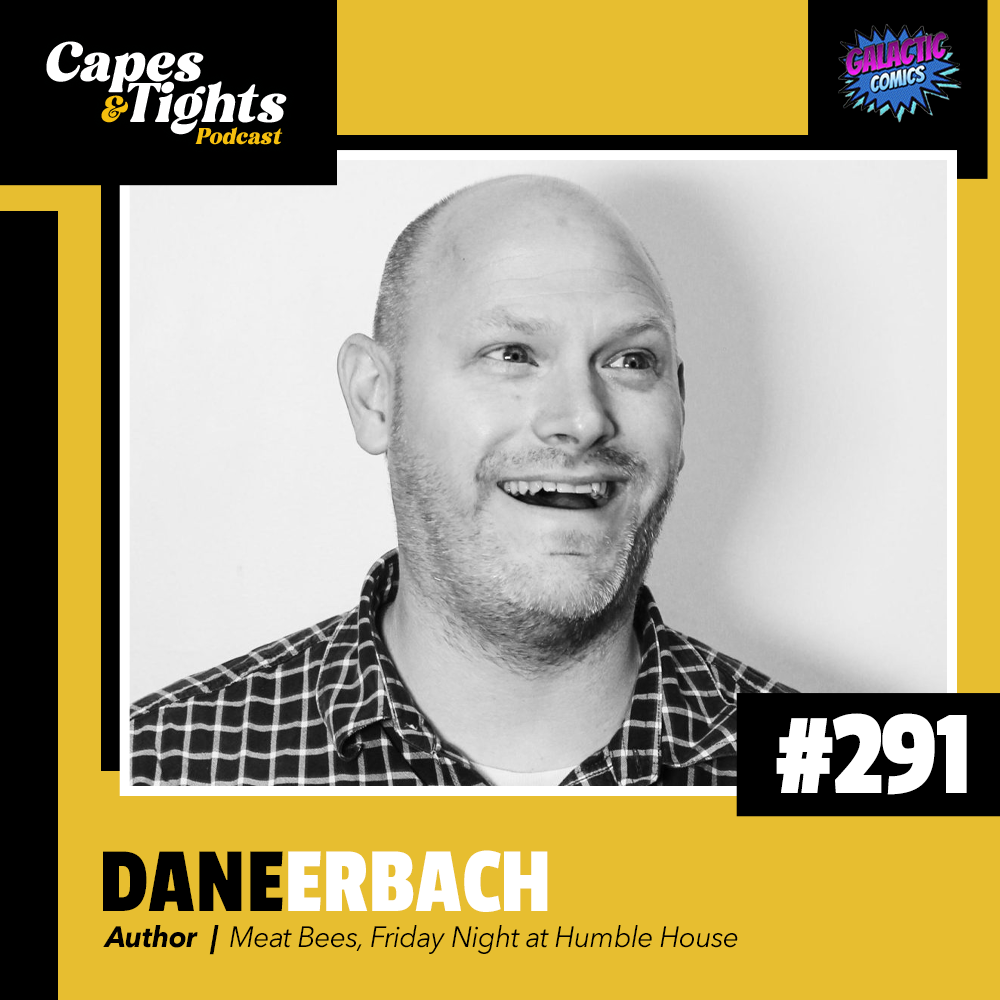
But this episode we welcome author by night, English teacher by day, Dane Urbach, who comes to talk to us about his book Meet Bees, which comes out August 4th from Clash Books. We talked about bees and all that kind of stuff right here on the podcast. But before you listen, follow us on Facebook, Twitter, Instagram, bluesky threads, all those places. Rate, review, subscribe over on Apple, Spotify or wherever you find your podcast. You can always watch the video portion of this podcast over on YouTube.com and as always, you can check out capesintites.com for so much more. But this is author Dane Urbach talking about meat bees from Clash Books. And enjoy everyone.
Welcome to the podcast today. How are you today?
[00:01:09] Speaker B: I'm doing fine. I'm really hot, it's really hot outside. But other than that I am doing just fine.
[00:01:14] Speaker A: Well, it's funny because I mean I. We're in Maine and you're in Chicago area. Is that what you said before recording? Yeah, yeah, yeah.
I feel like in Maine we have like a couple of weeks a year where we don't really complain that much about the weather, but we just complain about the weather no matter why. It's like it's too hot, it's too cold, stu snowy, it's too rainy. It's like we can't be happy.
I feel like that's just the subject we talk about is the weather a lot. So yeah, to me it's also super hot. I mean I can't.
I went to a, my wife's friend had a gender reveal party for their, for their kid coming up. It's a boy, which is, which is fun for me because I like my son. I have a son that can hang out with this boy. But the last time I was at this person's house was their wedding in October and it was like in a non insulated barn. And so like it was not too bad like at the beginning of the wedding like sitting outside wasn't that bad to like do the wedding. But like as the night progressed and like food was being served and things like that, it started to get really cold. And then yesterday was like one of the hotter days we've had and someone's like, can I just come to your house with this? Not one of these, like, really obscure, like four ends of the spectrum here of weather. Can we, can I come in the spring sometime?
But yeah, it's, it's, it's nice to be outside though, right?
[00:02:29] Speaker B: I mean, it's, I mean, like, weirdly enough, this is where I do a lot of my writing. So at least over the summer I don't do it out here in the winter, it's really cold. But I've been waking up pretty much every day all summer and just sitting out here and getting my writing on. So.
[00:02:44] Speaker A: Yeah, so they, they go. But like, so you're, you're an author, but like, that's not your, like you're a teacher that also writes. Is that like, that's me?
[00:02:52] Speaker B: Yeah, I mean, I kind of, I feel like a lot of, you know, like the, the image of like the, the author as this person who like just wakes up and does a couple stretches and types all day is kind of a myth. And even I think there's a lot of people that try to like, they want to be a full time author and that's so cool. But like me, I, has been, it's gotten, it's taken a really long time for me just to get a publisher to want one of my books and then, and then, yeah, I just gotta, I'm a teacher, so I gotta, I gotta pay the bills somehow. So that's how I do it.
[00:03:24] Speaker A: Well, it is this misconception that like the second you have a book that's being like talked about that you're fine, you're good to go, you don't need to do anything else in your life. You're just gonna live off A, this one book and then B, that like that's how much money you make off of things. There's a lot of people who have other jobs that do things like this. But like I've seen this is a very common crossover, right? I mean an English teacher and a writer seems like a very easy crossover there.
[00:03:50] Speaker B: I mean, I think part I probably is and actually there's probably a few friends of mine, friends like online friends that I know on like social media who are in that boat. If not an English teacher, some kind of teacher. But honestly, I think when I was in college I was like, I want to write, I want to be a novelist. I want to. Like, this is the thing I really want to do.
What job could I have that would allow me to do that, but also would help me. That would still like, help me fulfill that. That love for writing and being a writing teacher was basically it. So. Yeah.
[00:04:24] Speaker A: What ages do you or grades are you at?
[00:04:26] Speaker B: I teach high school, so most of my students are freshmen. But I have this weird group of kids that I love that follow me through all four years of high school. Some of them, because I'm the newspaper advisor too, and I teach journalism. And so, like, those kids become part of the newspaper staff and are the weird misfits that are just writing about all the crazy things happening at their school and uncovering stories. And so it's like, it's both a group of kids that. That where I get to make their first impression on them, but also the group of kids where, like, I. I get to leave the lasting impression. I hope. You know, are.
[00:05:05] Speaker A: Are they aware? Like, are they. I know you have a book coming out from a publisher and it's getting, you know, are they aware of this happening? Or is this something that, like, is it.
Is it weird to have that happen? Or is it. Is it something just like, hey, it's part of life now?
[00:05:18] Speaker B: No. Yes and yes is the answer to both of those questions. Like, so, like, a lot of kids when they don't know you, like, or a lot of my students when they don't know the teacher very well, but they're starting to maybe like, be like, okay, I don't hate this teacher. They, like Google them. That's like the first thing they do. And then now when you Google me, the first thing that pops up is the gnarly cover of meat bees. And they're like, what the hell is this?
Meanwhile, my. My older kids who have had me for a while, like, they just. We have this app where we message each other for the newspaper and they just send random messages like, Mr. Urbach, I'm so excited about Meet Beast. And I'm like, cool, but like, enjoy your summer too. Like, you don't have to like, keep talking to your teacher over the summer.
But yeah, they, they like, print out weird things and draw weird pictures and the COVID and bees and make weird puns in class. It is very cringy and. But I also love it because not that I think that they would, like, be built in readers in any way. It's mostly just like, they're just cheering for me and it's kind of nice to be cheered for.
[00:06:19] Speaker A: You know, it's nice to have this group of people that really have. It has no effect on anything. But they can also be there as like a support thing too. Like it's one of those, like they're like, they're the ones that are cheering for this, you know, August date to come out that your book's coming out. And not to, you know, not to random people. But yeah, it's funny, I always think about that thing when you're in more of a public eye like that and do something like this is. Is what this happens. Like other professors or people that work, you know, with a bunch of people. I've seen people who work like a big office and they're like, I try to keep my, my stuff, you know, secret. And you're not like Freedom McFadden who's like operating on people also as a pseudonym of writing a pen name, writing, you know, thrilling novels. This is, this is your name. Like you're going by your name.
[00:07:02] Speaker B: My identity is totally tied now to that, to that gnarly B cover of that book forever and hopefully and hopefully more gnarly covers in the future.
[00:07:11] Speaker A: I'm for it because that's one of the things that draws you in. So the name of the book obviously draws you in. You see it obviously. I personally, on a personal level and I think in some other horror readers level is the publisher. Clash is a phenomenal publisher.
8114 was amazing.
Joshua hall, that book was phenomenal. Again, Clash. And I've met some people from Clash and things like that over the years. So that's where like that also pulls me in. But the COVID let's be honest, that cover is going to pull. Either pull some people in or tell them not to read it. One of the two. There's nobody in the middle who are like, maybe it's either going to be appalling to people or like, I got to read this book. Do you agree with that?
[00:07:49] Speaker B: Yeah. Yes, I do. And actually it's been, it's been kind of a blessing and a curse. Like on the one hand especially, I mean, for what it's worth, like Joel, the, the artist I worked with, I mean he, he painted it and it was amazing. And I gave him little bits and pieces of like, add another be. Add a little bit of more blood and, and stuff like that. But he like that concept was all his. So like, props to him. But I will say, as we've been gearing up to release the book, it's actually been kind of.
I don't know, it's been a really great thing because a lot of people have seen the COVID and it's gotten more attention than I think it would have. I think the, the, the name of the book helps a little bit too. But I also think there's this other side where it's like, it's probably, it's probably driven off some people who had probably enjoyed the book because it's, it's, it's gory, but it's like there's, it's not just a splatter punk, like, gore fest. You know what I mean? There's a lot. I'd like to think there's a little more substance to that book. And, and there might be a reader who's like, ick, no, I'm not going to read that book. Even though they might relate to Scarlet in some ways or they might, they might think it's funny, you know, but then the other flip is a lot of people like, bro, I have to pick up this book and they read it and they're either like, they're, they're disappointed that it's not a splatter punk gore fest, or, or there are people that are like, I'm not a horror. I'm not a horror reader at all, but this book was. Or this cover is just too great. I gotta read it. And then they read it and they're like, ugh, I don't like horror. And I'm two stars. And I'm like, oh, all right. So, like, you know, like all of the, all of the momentum before a book's release comes from early readers and comes from, like, from reviews and ratings and stuff. And so having having a few people that are like, oh, this is too ya. This wasn't as. This is nearly as scary as I wanted it to be. Two stars. And meanwhile other people be like, oh, this is way too scary for me. I don't even know why I picked up this book. Two stars. And I'm like, all right, but. But either. I still am so proud of it. Like, I never would have thought that I would have such a crazy book with my, with my name on it. You know what I mean?
[00:10:01] Speaker A: Well, like I said, Tim, there's certain things, and I've done this over the years. I get a mixture of publishers sending me emails. Hey, you've read X, Y and Z. Would you like to read this book? Or just cold emailing saying, I know you review books. Like, would you like to review those books? And then there's other. I use NetGalley as well. So I go on NetGalley and I'm like, looking through every Time that I post, hey, these are new books that are added. And a lot of times the first thing you do is look at the COVID Right? I mean, like, to be honest with you, covers pull you in. And over the past three or four years, there's been a few books that have been phenomenal because I was like, I have no idea who this author is. I don't know what this book's about, but the COVID was phenomenal. I'm a designer by trade, so like, to me that also is part of my influence into why I like the covers of books. But yeah, so this one was to me was like, that was like, I honestly am the creepiest enough that I'd probably like hang this as a poster on my wall. So if you do do events and you want to sell prints or give away prints, 100% guarantee that people will take these prints and put them on their walls. Because like, I think it's just one of those, like I put it like in my bathroom maybe it's like people be like, what the hell is on the wall in your bathroom?
[00:11:04] Speaker B: Absolutely. That's such a cool idea. I'm totally going to steal that idea for sure.
[00:11:08] Speaker A: But like, it's so, it's funny actually. Funny because I was talking about preparing about this, this recording over the weekend and last week and my son, who's five, got stung by a bee for the first time over the weekend. And I was like, is this because I'm about to talk about bees on Monday?
He took it like a champ. I mean, he, he screamed, he told me it was a mosquito bite. And then he just kept on screaming and I was like, that's probably not mosquito bite because they're annoying but they're not that, that, that bad. And I look and you can tell it was a bug bite. And then we're also like, okay, this is the way we find out if it's allergic to bees. Let's, let's, let's figure this out. And we put a band. And he was fine. He's all proud of it now. And I was like, dude, you're so strong.
My wife says she doesn't remember ever being stung by a bee. So that's, it's possible she's never actually been stung. But I was stung by a lot of bees in first grade. We went for a walk in the woods and someone stepped on an in ground bees nest. And it was like first grade kids like going to the bathroom, like taking their pants off to go to the bathroom. Bees were flying. It was Horrific. And so I can imagine someone who had, like, PTSD from that kind of an episode, seeing that cover being like, I want nothing to do with this book.
[00:12:12] Speaker B: Yeah. And I also think. I think that's kind of part of the excitement, too, is like, Like, I hate bees and I hate wasps. And, and when I was a kid, like, I was like the kid who'd run across the soccer field in the middle of a game to run away from a. From a bee. You know what I mean?
I don't think I'm as afraid of them as I am now because I've learned a lot about him from writing that book. But, But I also, I. I think that's part of why some people are picking it up, because they're like, oh, my gosh, that is so terrifying. I hate bees so much. I have to pick up this book because it's going to tap right into the thing that makes me scared. And which is why I think a lot of people read horror novels. You know what I mean? They like that. They want to feel the feelings that go along with the thing that they're scared of.
[00:12:54] Speaker A: And I. And I agree. And I think. So part of the solicitation and description of this book is Jaws meets or Jaws with Wasps.
And was that originally. Was that part of the pitch from the beginning, or is that, like, as you're writing it became there? Was it like, I want to tell this story and this is what I'm using as a pitch?
[00:13:10] Speaker B: Yeah, no, that was my. That was my concept before I had anything else. I, I. Because the book kind of was inspired by a vacation I went on, and I. So I wanted to. I wanted to create the. I wanted it to be wasps. I needed it. I needed the bees to be eating people. And that was, like, the first thing I knew. Right. I didn't know anything else about this book. But then I also knew the first thing that came naturally to me was like, how do we come up with. With an Amity kind of like tourist town where.
Where there's people coming and going and there's a reason why, even if people are being killed, eaten by bees or stung by bees, you know, or whatever, that they might want to keep, Keep going, keep, like, a business in, you know, running and stuff like that. So that was before I knew Scarlett and Liv and before I had any other goofy thoughts about the book and how I was even going to start it. I just knew it was going to be tourist trap town, like Pigeon Forge and man eating bees, disrupting that tourism season.
[00:14:15] Speaker A: So yeah, it makes sense that I was explaining this. Like, I read this book fairly early as well. One of the benefits and the downsides to class. Class does let you read books for, like, a lot of people, like, months early. And then you get to the point where, like, it almost, like, is forgotten the back of your brain. Like, I'm putting together, like, my. My best books for the rest of the year list. And I was like, oh, yeah, that book hasn't come out yet. And I'm like, putting this on my. Got to make sure I put that book on there. But I feel like I read 81 14, like, a year before Josh's book came out. And I'm like, I think it's a similar thing here, right. A while ago.
And as I was talking to people about it being like, I really recommend this book, and so on and so forth, I was like, the jaws with wasps did draw me in as well. But also, I realized that if you're afraid of sharks, just to stay the hell out of water. Right? I mean, that's the easy thing to do if it's a big shark in the water. Just stay the hell out of the water. Bees, wasps, hornets, all that stuff. It's a lot harder to stay away from in most of the places that I live and been over people live. You can't just be like, I'm just going to stay away from bees. Like, it's. It's. I walk out my back door and there's a bee. I just mentioned my son got stung at our camp this week. Like, there's bees and wasps everywhere. Can't really stay away from them. Unless you're just like, I'm going to stay inside for the rest of the summer.
[00:15:22] Speaker B: Right.
[00:15:22] Speaker A: I mean, so that's. That adds to that fear, in my opinion.
[00:15:26] Speaker B: Yeah. And I think. I think that was part of what I was going for. Like.
Like, on the one hand, like, you can't fight off bees. Like, there's nothing you can do about it, you know, so if. But it created a writer problem for me when I was writing it, because I'm like, all right, I got this creature feature kind of book.
How does my protagonist actually battle wasps? And so I had to. I got kind of creative. I don't think any of these are spoilers when I say that, like, my main character starts coming up with some clever ways to. To attack the bees. But they're all. Or the wasps. Sorry, but they're all, like, horrible ideas. I learned. I learned that if you spray a wasp with soapy Water. In fact, I had a friend, we were hanging on their back patio while I was riding meat bees. And she starts spraying them with soapy water. And she's like, yeah, something about the soap kind of like goofs up there.
You know, it clogs up their breathing and they just die. And I'm like, oh, gosh. It's terrifying and sad, but also maybe that's a way to kill the bugs. And, and. And then the other one was just light them on fire and. But, you know, like, if you light a bunch of bees on fire, they're probably going to fly around on fire and light other things on fire. And so that was. I had a little bit of fun with that. The other one I was kicking around that didn't make it into the book was.
Was like, there's a. Kind of the honeybees, if they are being like, if a. If a. Bees like a, like a. A hive is being attacked, they will run around the wasp really. Or hornet or whatever, really, really fast and, and heat them up. And so they. Their body just overheats. And so I thought that could be a really cool. You know, in the book there's a bee farm that has honeybees and stuff like that. And I was like, setting up for that a little bit. And then the way the story worked out, I'm like, I just don't see how this. I don't see how this one can work.
But it's still. I had to get really creative about, like, how do I kill the bees? And thankfully I. Thankfully the book kind of worked itself out, you know.
[00:17:34] Speaker A: Yeah, I agree. It's one of those things again, like, even if you swing it well, you can't just like, swing at like one. Like, you know, like, there's animals that you can, like, you're supposed to like, you know, make yourself big when a bear comes up or whatever, there's like, things you can do and then they run away and you see it right away or whatever. But I feel like, yeah, bees are like so small. Like, unless you made it like super nat, like super supernatural or like superhero like, and he shrunk to the size of an ant and that's how they battled or something like that. Like, I could just picture like, ant man, like, fighting a wasp. Like, you know, like. But yeah, so. So it's hard to do that in swarms of it. I could understand being like, not being able to focus on one thing. If you have a swarm of flying insects of any sort of trying to focus on, trying to get Rid of them all is hard, and I think that you would definitely lose that battle. And I feel like there's some people who found that out in this. But your. Your horror side of this, like, the actual, like, frightening, terrifying horror side of this book is these wasps and these flying insects that.
[00:18:32] Speaker B: That.
[00:18:33] Speaker A: That can do some damage. But there's more to this story. So, like, you have this, you know, bees, which you obviously chose wasps as the. The creature of sorts in this and not like a bear or anything else you could find out in the wilderness. Like, you mentioned you went on a trip and it's just like, spurred off of that. What led to wasps. I know you mentioned some things about wasps. Like what led to wasps being this. This thing of. This. This frightening part of it.
[00:19:00] Speaker B: Well, so the story is that I went. My family went on vacation in the Smoky Mountains with a couple of other family friends of ours.
They all had kids, so we rented a big cabin together and split the cost. And we were just all moving in and I unpacking and stuff like that. And my. My kids were like, let's go outside and check out the woods, you know. And so they ran out with their. The. The other kids and one of the adults. And like three minutes later, they all came running back inside screaming.
One of them had stepped on a nest, right? And all of the. All of these wasps came and attacked them. And one of them, like, the one that stepped on it, I think, like, she got stung like a dozen times and she's allergic. So we were like, panicking. We're like, oh, no, is she gonna. You know, and she handled it. She was fine. We went and got antihistamines and stuff for her just in case, but she ended up being, you know, it would not being a problem at all. But, like, as the kids all ran inside screaming, there were still bees, like, on one was like tangled in my daughter's hair, and my son had to like, swipe it out of her hair. And then it was still flying around and I had to smash it and do the dad thing, you know, and it was like. It was terrifying. Just the idea that, like, if you just walk outside, you could be attacked.
And had they not been like 20ft from the door, they. They might have been in much, much worse trouble. So. So file after that. I'll calm down and stuff.
I went out to the car to get more of our, like, our luggage and stuff for the vacation.
And I walked up to the car where there had been like, smashed bugs all over the front of the grill and the windshield and stuff. And I saw the wasps. They were like all over the front of the car, just like, like eating the, the bugs guts all over. And I was like, what the hell is happening? Do wasps eat bug guts? And so I googled it. Like, I stood out in the sun sweating with a bag on my shoulder and I had to Google this. And one of the, one of the entries was like, you know, I'm an English teacher. I had to try to find a reliable source. And so I found a, like a, a website from a college that was like, you know, researching wasps and, and their behaviors and stuff. And one of them referred to them as meat bees because they do eat meat. And then they like spit it out into the larva's mouth or something to feed them. They bring it back to the nest. And I thought that was so gross. And I also thought it was so, like with a. The word meat bees just like, I instantly knew. I was like, I don't know what
[00:21:42] Speaker A: this, I don't know what this book
[00:21:43] Speaker B: will be, but I have to write that book next, you know, and. Yeah, that. So that's like kind of the story. So.
Yeah, the thing that's weird about it is like, I don't often start books with like a title before a concept or before a character or anything, but that one, like, yeah, I had to, I had to write meat bees, whatever it was going to be, you know.
[00:22:02] Speaker A: Yeah, yeah. And again, title, cover the plot itself. But you, you. So you have a horrifying attack of bees and wasps, things like that on there. But you also had to obviously put other things in there to make it a story that made people a, want to go out to the same place over and over again, like you mentioned. So it'd be like a public area like that. But also there's other things that go in to make a good story. It's like, so there's other plot lines and things that happen to you. This father, estranged father, daughter, relationship. You got in there. You have mental health stuff going on.
You mentioned the young adult part of it. There is a coming of age element in this. Obviously teaching high school students is not easy, but like, it's obviously ingrained in you seeing these things every day probably too. So, I mean, so you, you found your villain and then you. Did you step back from that and add all the other pieces that you wanted to put in there, you know, that made the story where it is?
[00:22:56] Speaker B: Yeah, I mean, pretty much like I started just, you know, I usually start with a protagonist and, and then Try to shape them a little bit, and I don't always know what the end's going to be. I don't always. Like, in the case of meepies, I didn't know what would be controlling these bees or why these bees would be attacking. I just knew bees eating, bees eat. That's all I knew. And.
But I created a character who I thought would have a fun time trying to, like, battle these bees.
Not all of my care, like, you know, and I try to create characters that are flawed and create characters who have a, you know, an interesting backstory. But I just. I thought for this book, I really wanted to create what I saw as a very bratty kid who. A really bratty teenager who really didn't like her dad. And that was pretty much all I knew. And then slowly, I started adding these other pieces to it. Like, she didn't like her dad because her dad left her mom, and she really likes her mom. And then I started piecing, like, music's a really important part of my life. So I started. You know, I develop a lot of characters with music, so I started projecting all of this, like, early 2000s pop punk onto.
Onto my main character. Her name's Scarlet, because she worships her mom so much that she just listens to whatever her music her mom listens to. And her mom's, like, still stuck as a, you know, an older, you know, a millennial that's still listening to, like, Newfound Glory and stuff, which, by the way, I also have students who are the same way. Like, they love the music that their parents listen to. And I'm like, you're not supposed to know who Quicksand is. Stop listening to them. You know, but it's cool, right? Like, they.
I feel like they're. I took a little something from, like, the kids that I know, and I was able to, like, work it into this story.
What I didn't know is whether my character was going to be a brat at the beginning and at the end. I think she is, but I think she. I also think I needed to create an arc where she changes and where people change her and this and the conflict changes her. So, like, I felt like the relationship with her dad was one way to show her coming of age is, like, maturing from hating to opening her heart to the people who care about her. And so. But, yeah, I had a lot of fun with Scarlett. I. I thought I started with, she's kind of a brat.
I've read a couple reviews of the book that said that they couldn't get past chapter one because she was too much of a brat. And I was like, all right, whatever.
If you're right to the end, you'd maybe see that she's not as bad as you think.
But then I, at the same point, at the same time, I kind of realized, like, it kind of created a complex character. A character who wants to be loved but is like, wants to be loved but is pushing people away and is, is loving but doesn't really want to show it for some reason and has this kind of complex relationship with her mom that feels like, like it's a weird kind of give and take between them. And what I liked about it is it ended up being more complicated than I thought. And she was way less of that simple bratty teenager than, than, than I set out for her to be.
[00:26:20] Speaker A: Added that to it. And I'm a, I'm a dad. And so like, even though my child, I have two kids, I have a five year old and a two year old, even though they're young, it still like, made you like, you know, don't make the same mistakes or, you know, all that stuff. Like you can connect. I connect on a different level. Not specifically with, with Scarlett. Like, with the relationship with, with her dad is like, my wife and I are still together, so it's not this, you know, separate households, but still it's still one of those things where it's like, that just adds so much to it. And again, what's so funny about is like me reading books like five or six years ago. You take a different approaching your brain. I am not one of the person, like my wife won't watch like a movie with the kid gets kidnapped or something like that. Like, she just can't watch those. To me, I'm like, okay, it's still fake. It's still a movie to me. I can still separate myself.
And it depends if the movie's good or not, to be honest, or the book or whatever. But, but I was like, you know, I, I. So that's to my point is that I, I connected in a way that I didn't think I'd connect. I was there for the, the terror, the horrifying part of this stuff. And I was like, weirdly like, that was cool, but it was like there was so much more to the story. And I'm hoping other people get that out of it too. Where there's like, this not something you can do to change, but just, I don't know, just there's just more of a.
The relationship part. Stood out to me.
[00:27:35] Speaker B: Yeah, I. I hope so too.
You know, Like, I think there's a couple, like, levels that someone could maybe relate to.
Girl or boy, however you identify gender wise. Like, I think a lot of us have a bratty streak. Like, a lot of us, like, get pissed off at our parents for no reason or have bad reasons to be pissed off.
I was like, a punk kid when I was in high school. Like, I was also an Eagle Scout, right? So whatever. But I also was, like, going to punk shows and, like, moshing and stuff and playing drums in a punk band, like, a local punk band and stuff.
[00:28:12] Speaker A: And.
[00:28:13] Speaker B: And, like. And so, like, there's always been a side of me that's been a little bit anti conformity, anti, like, follow the leader kind of stuff. And. And in some ways, I put a lot of that into, like. I mean, I. I'm trying to dance around this, but I'll come right out and say, like, antisocial. Like, even. Even my friends. Like, I had good friends, but, like, sometimes being with. With people I love is exhausting.
And. And I put a lot of that in Scarlet. She doesn't want to be friends with the friends she meets at first. She just kind of pushes them away and doesn't want to be around them. So I think. I think a lot of readers probably know what it feels like to be a snotty teenager. You know what I mean? But I also. You're. I love what you said about, like, the parenting side of it. Like, as a parent, you start thinking, you know, like, I put a little bit of myself into my. Into Scarlett's dad and. And about, like, how do you be supportive when kids might be pushing you away? And how do you.
Because My oldest is 14 now. He's gonna be a freshman in high school. He's gonna be the same age as my students, and that's gonna be. Freak me out a little bit. And. And my middle son, who's always been like, the little kid is gonna be in middle school now. And. And our daughter, who has always been the literal baby, is now in, you know, making her way through elementary school. And so, like, you know, I'm starting to parent kids. A teenager who doesn't always want to do stuff with us. And I'm. I'm sometimes the parent of a. Of a tween who gets really angry really fast, and it's hard to keep track of why. And. And so, like, I do hope that, like, yes, I'm glad. I hope that the people who pick up the book for the Horror and for the COVID are like, oh, awesome. But I also think. I hope they're like. They're like, you know what? This is making me think about how much, you know, how to find the balance between letting your kid go and holding on to them, you know, or this is. This is reminding me that maybe I should call my mom and tell her I'm sorry for being a stinker when I was a kid. You know, like, that kind of stuff.
[00:30:16] Speaker A: Yeah. And I'm right there with you. My dad to this day still is a pastor, so I grew up in a household, a church household, and I was always the rebellious kid who. Who was pushing the boundaries to the point where, like, this close to being in some serious trouble, but, like, I was able to get it, like, just below that, but still. Guarantee you my dad has white hair now because of it. This is not like, one of three boys. I'm the middle child. But I still think that, like, it was this. This. This rebellious side of things, too. And. And I listened to extremely heavy music. And so it was. I think. I don't know if it was a style I really wanted at the time, but it's because my dad listened to rock, but my dad's rock wasn't heavy enough, and I needed to listen to heavier stuff. And, like, they need to be screaming and so on and so forth. And, I mean, funny. Funny enough, a lot of those bands were Christian bands. So it was. It was like one of those things. I'm like, rebellion. But I'm also, like, kind of not because I'm making you happy, because listen to heavy music. At least it's this kind of heavy music. And. And so, yeah, I could connect myself on that side of things, too. But, like, it shifted weirdly. I just turned 40 in May, and I just, like. It shifted in that weird way that, like, you know, trying to relate to my dad. My dad was this age when this happened or whatever. And I'm like, oh, my God, I'm the same age as my dad was at that time. And so, like, yeah, seeing the parenting of things in these books is just something that sticks out a little bit more to me. But, like. But that's. But it's still not as terrifying as the wasps in this book, which is saying something to me. I think it's like, I'm still terrified in that sense. Maybe I was terrified for my kid to be the age of Scarlet.
Maybe that's what I'm terrified for. Not just all that stuff, but, like, the book is unsettling. It really is in multiple different ways. And like I mentioned, there's the. If you're a young adult reading this book, it might be unsettling in that sense where you connect more with Carla. If you're a parent, you may unsettling because of the. Connect with the parents or wherever. And then again, if you're afraid of bees and things like that. But it's at the core of it, it's a creature feature. Right? I mean, is that what you would call it?
[00:32:04] Speaker B: Yeah, I mean, I, and I, I think that's, to me, supernatural horror is my jam. I, I like slashers, I like serial killers, I like the mysteries behind them. But really, like, I just need a weird alien or a weird ghost or I need some Cryptid or something else supernatural, you know, and it's.
[00:32:24] Speaker A: I think. Is there something that you went into it when you went into, like, making this book that you wanted to make Creature feature fresh in 2026, or is this just you tried not to, to, to not copy or emulate anything, or is it just one of those things that you just go into it? This is the story I'm making.
Do you avoid, like, as you're writing a story like this, do you avoid other Creature feature movies and books? This is to make sure you're not like. Yeah. Or do you do and take them more?
[00:32:47] Speaker B: Yeah, no, that's a great question. I, you know, so, okay, my thing is aliens. The xenomorph alien.
Like, fandom is totally my jam. I've read almost all of the books that Titan has published and, and all of the old Dark Horse novels and stuff like that. And I mean, like, I've been a lifer in that, in that fandom. And so maybe that's where this comes from, right? I mean, like, they're bugs in the same kind of way, aren't they?
But, yeah, when I go into writing a book, I, you know, I, I'm. I'm involved in, like, I'm trying to be involved in, like, the social media side of publishing, connecting with editors, connecting with other authors. Some of them are like, some of them are like indie authors. Some of them are aspiring authors. You know, I'm still, even though I've got this book coming out, I'm still like, hustling, trying to get the next book sold and, and all of that stuff. And I feel like there's a lot of conversation about how do we write to the market, how do we write in a way so an agent gets your attention, how do we write so that, like, my Indie novel can find its 200,000, like, readers and make me a gazillionaire and all of that stuff. And I don't know if I'm weird or not, but, like. Like, if.
If no one reads Meepis, or like, if, like, five people really love the Meepies, I'd be like, that would be it. That's all I would need. So with that mentality in mind, I kind of just go into it, ready to write this story that excites me. Like, I don't really care if it's marketable. I don't even care if it's original. In fact, like, in horror, I think there's an as in punk rock. And I'm sorry, I'm going all in a million directions here. I'm thinking about. I'm thinking about religion, for example. Like, a band who, like, all their albums have a very similar vibe to them. Even if. Even when they're trying something new, they kind of fall back into what feels familiar, and people love them or hate them because of that. You know what I mean?
Horror can be a little bit like that, too. Like, if you're. If you're trying something new and breaking boundaries, people are gonna love that, you know, or they're gonna hate it because it's weird. Like, the Back Rooms is, I think, a great example. Like, so many people loved it because it was so unusual, and then so many people went into it and they're like, I don't get it. Like, this isn't the horror that I. I signed up for. Right.
I kind of feel like.
Like the fight is not worth it. So I'm just going to write whatever makes me excited to keep showing up and type in the thing. And if.
And if it's. If someone says it's not original, I think that's fine. And if someone says it's really fresh and really original, I'll take that as a compliment. But really, I'm just telling the stories that feel fun to write, you know, and I'm.
[00:35:35] Speaker A: I'm glad for that because I feel like those are the best stories that are written. I do think that there's this. You know, even some of the most phenomenal writers out there could. Could go with trends or publicly, you know, they're in their fifth or sixth book and their publishers are like, you know, it would really sell. Is this what, you know, X, Y and Z.
And sometimes those books are the ones that fall a little bit more flat for people because it wasn't just, like, I wanted to tell the story for so long. Some of the. Recently there's a couple of comic book series by Chris Condon who he writ. He wrote the original story when he was in high school and he said finally after a while I pulled it out of my, you know, book that I had and I obviously tweaked some things and updated some things and did some stuff. But like this is a story I've wanted to tell for so long and it was one of his best stories he's written. And so to me I'm like, that's kind of cool in my sense. Like write it what you want. You do want people to read this book. Obviously you put a lot of time, effort, energy into this but. And you want people to buy it. But in the same sense, like you said, if right now you have like over 200 people have read it so far on something like Goodreads who have at least reviewed it on there and probably more have read read it or plan to read it pre. Pre release. But just that alone is probably pretty cool. If it was me, I'd be like, holy crap. First of all, it'd be me. I'd be hiding in a hole somewhere being like, I hope people like this, but that's just who I am. And so like I don't want to hear about it like when the mass is get it on August 4th, I really hope people like it kind of thing. But yeah, you're right. And so, but the success of this book too also helps with future books being published and purchased by publishers. So. So in the same sense, like get out.
You know, Jason Pargan, he writes like the John Dies at the End series and stuff like that. He just posted on social media. Did you see the thing he just posted about why pre order?
[00:37:15] Speaker B: I don't think so. But I also have been teaching kids about stop signs all day, so I hadn't gotten a chance to be on
[00:37:20] Speaker A: no, he wrote, he posted this thing about why pre order and it was like when you pre order a game you get like extra levels and equipment and things like to help you win the game. When you pre order a book, it's the same book that you pre order or you buy it on the release week or two months later. Like, you know, the only thing that changes is a couple months later if it's really hot, it might be a second printing outside of that. Like it's not like you get like a pre order copy. And he's like, no, what we're going to do is it's the same copy but we're just going to take stuff out of the one that comes out afterwards so people are disappointed with it. So you're not going to get into the extra. He's like, we're going to take like a character out of the book and make it really confusing to read. So you need a pre order now. And I was like, no, it's true. I mean, the big thing in the industry that I work with here and the fact that I talk to you and authors and comic book writers and comic book artists is pre ordering tells the publisher that people are really excited about this book. And so that's why I always like people to go out there and preorder. A lot of places you preorder to don't even charge you until the book comes out. So, like, there's no real difference in the sense of buying it or not. We're telling your local bookstore that you want to, hey, can I get meat bees? And. And I've done it before where I've gone into my local comic shop or bookstore. I've been like, I'm really interested in Danes meet Bees. And someone would go, I've never heard of that. And then they buy three or four copies because they're like, oh, if he, if one person's interested, I probably could sell a couple more kind of thing. And so like doing these things a couple of weeks in advance or having Clash send out your book, you know, digitally at least to, to hundreds of people ahead of time, helps people get the word out. And as of right now, you're doing very well. I mean, obviously I would recommend, as an, as a person who's writing books, don't read most of those.
Don't read any of them.
[00:38:50] Speaker B: I don't. Honestly, I don't read any of them. Nope, I don't.
[00:38:54] Speaker A: You know, the best ones are the ones that it is.
The 1 star reviews are always kind of funny to read though, to be honest with you, because there it is. One of those people will pick out the most stupidest things to be upset about.
[00:39:06] Speaker B: Yeah, well, you know, so I'll be honest with you. I feel really, really lucky. Like, I feel like, you know, Clash, a publisher that I sent it to, thinking, like, they're too literary for this, you know, like they publish stuff that's just a little more stylish and a little more like, bizarre. But then, you know, they've also published books about ska and they've published books about. You know what I mean? Like, there's a couple of other books that off the Top of my head, I'm not remembering, but I'd be like, oh, no, that's a, That's a little, you know, off kilter, you know, too, that you wouldn't expect them to publish that one. And I think the, the, the. The couple that runs Clash, their taste just sort of skews to like, this is wild.
[00:39:50] Speaker A: This is cool.
[00:39:50] Speaker B: Let's just publish it. You know, there's not as much of a rhyme or reason, so I didn't expect that they would want it. And so when I literally, like, I almost passed out when I got the email, they're like, we're interested in this. And, And I didn't. But, you know, like, just so being published was enough. Like I said, five people reading it would have been enough. And then, so the combination of the title, the COVID the marketing at the right time to the right group, people did get it in front of a lot of people. I mean, like, there's been, I mean, yes, a couple hundred reviews on goodreads is pretty good, but like thousands of clicks and, and stuff on NetGalley and, and it was just a. You know, like there was like thousands of people that were thumbs downing. Well, maybe thumbs up in the, the COVID You can do that on NetGalley. And a few. And dozens of people that thumbs down it, which I still took as a compliment really, but like. So I just feel really lucky that, that it's just sort of. Feels like the right combination of. Of variables kind of came together for this. But I will say I don't. I can't read the reviews anymore because, you know, they say stuff like reviews are for writer or readers, not writers, but as a reader. And I'm a, I'm a reader. You know what I mean? Like, I'm reading all the time. I don't read reviews either because they're, they're cranky and they're nitpicky and. And they feel a little forced. Like sometimes it feels like a person who just trying to get a few clicks with their controversial, like, take and, and they're, you know, we just live in a, in a, In a world now where, like, reviews have weight even if. When they're not fair.
And so I don't, I don't read them. Actually, I read a couple at the very beginning and like the one I told you about, where the, the reader stopped reading right at the beginning because Scarlett was too much of a brat and there was too much peeing at the beginning of the book. And I was like, fair, fair, but. But like, that counts against me. And. Weird. A little algorithm of Goodreads. And so, you know, it not suiting your taste is not exactly the same as it being a bad book. So, yeah, I stopped reading reviews and. And, which means, like, yes, sometimes I miss the praise, and sometimes I miss a really kind reader saying something really awesome.
But I. I don't want to stop writing and lose my. My confidence and my passion for writing just because somebody.
Because somebody doesn't, like, doesn't think that the bees eating people's realistic enough. You know, stuff like that.
[00:42:25] Speaker A: Oh, my. My day job is a graphic designer for. For a brewery. And so we stopped reading the brewery, like, the beer reviews. It's a website called Untapped, which is like the. The Goodreads for beer. And people do the same thing. I'm not into ipa. Just one star. It's like, well, you went into it not knowing you're into this. Why would you. I only read romance novels. This horror book is horrible. And it's like, well, that's not what that is. You're supposed to do it in the category, the genre, the thing. But you review however you want to review. It's not. We can do about that. It's really. There's nothing you can, like, do about that. But, like, I do think that it is sad in the sense that it does, like, hurt Algorithm people. I was just. I read. I picked up when I was on vacation. I thought I had it right here. I don't know why I must put it away.
I was on vacation in the White Mountains, and I stopped by a bookstore, and I saw this Twisted Tales. It's like Disney stories that are, like, told. And I was like, these look so much fun. So I started reading the Aladdin one, and I was like, oh, this is cool. And I'm about. I'm almost done with it. And so I was like, oh, I'm gonna go click on the Goodreads and see what other people have said about it. And they're all like, this is basically the same story with a slight change. And I'm like, yeah, I don't understand what the complaint about this is. That's the whole point of this thing. And I also came from a different side of things. I've been reading what if comic books for years. They've done like, what is Spider man this? And so to me, I'm like, okay, maybe you don't get the concept that much. Like, the first 25% was almost word for word from the movie. I'm like, yeah, because they were trying to set the foundation of. This is the same story. But hold on one second. Aladdin didn't get the lamp and now it's, you know, crap's hitting the fan. Like, so I was like, laughing. I'm like, ah, there's some people who just either doing it for. For attention so you get the comments or just don't get the concept. And that's. You can't do much about that. And so, you know, I'm not the world's greatest book reviewer. And so people probably are out there complaining about my reviews as well. And so I tend to steer a little bit more positive in the sense that you worked hard on this. So, like, you already get like a half star because of how hard you worked on making this book. So you already. You're up there.
But also, I just don't review books that are not good. Does that make any sense? Like, I just like, if you're not. If you're. If your book's below like a two and a half, three. Three years, three star, two and a half star. I am just done with it. Like, I'm not even gonna talk about it. There's no reason to trash on it. I'll just praise the books that I like. And so to me, I'm like, you're not really ever gonna see me say one star on this. It's because there's no reason to like, I.
I just don't get it. But that's. And then don't tag Dean Urbach one star review. I'm gonna tag you in it on social media. So you see this.
[00:44:57] Speaker B: I'll tell you another story about that. But I will. I will comment that I used to write a lot of album reviews. So I used to, you know, review for a couple of like, smaller magazines and stuff. And I was the same way. Like, I. Even if I. It wasn't like my. I'll never forget, like, I got tapped to write a review for a Shins album and I'm not a huge Shins fan. There's a couple songs that I really like. But, you know, I did the research and I did the listens and I listened to their other stuff. So I had another.
A place to kind of like start from. And I was like, you know what? I understand where. How this fits in the discography and where they've grown. And I can write something that I feel like captures what they're trying to do so that other readers can. Can decide if that works for them or not. Like, I mean, I Think.
I think that if you write all positive stuff, people are going to think you're biased or something, you know, and that's, you know, like, that's stupid. But then if you write all negative, it just sort of seems like you're.
Or even just like a huge. A huge negative, single huge negative, like, thing that you don't like.
I feel like that stuff just ends up looking a little bit like you're clickbaiting or click farming or. And so, like. Yeah, I genuinely do agree, though, that, like, as for books or for music, find the thing that's worth.
Worth celebrating about the text or just let it fall back into the grasses, you know, and I'll share that story really quick because I was. I drive between two schools at my job. I. There's a freshman campus and then there's the upper campus. And so I went and splurged on some Burger King because I was weak. And I'm sitting in my car, like, eating French fries and. And someone had tagged me on a video and I was like, oh, okay, that's cool. Let's see what it is. And it was a. It was. Well, you know what? They might not have tagged me. I might have just stumbled upon it because I was looking for. Meet these reviews anyway on Instagram, this. This lady in France, like, wrote this whole review that just. On Meat Beast, like, totally. And it said things like, you can tell this author's never talked to a teenager because this book is so unrealistic. And I was like, what the heck?
And. And it was it. But it still broke my heart, right? Because, you know, even though she was so wrong, like, how. How.
How could you get this review? So, like, Google the author, like, click on my, my Goodreads thing and see that he's a teacher. You know, like. But, like, it was so wrong. And yet it still was enough for me to be like, you know what? I'm not in the mood to write today. You know, and so I, yeah, I'm. I'm not as sad. Maybe I am a sad SAP, but I guess I'm. I don't feel like I'm that.
That I'm that extreme, you know, with my feedback.
[00:47:44] Speaker A: But.
[00:47:44] Speaker B: But, yeah, I totally get you. I agree with you. And I think, like, if we celebrate books, people are more likely to pick them up. They can pick and choose whether it's a good fit for them, but if we just shit on books, then they're not going to pick up a book that might actually be a good book.
[00:47:58] Speaker A: You know what I Mean, and I
[00:47:59] Speaker B: think they might actually enjoy it.
[00:48:01] Speaker A: Everybody has their own. Their own things. I'm a horror fan, but not every horror books for me, you know, I like. I like the thriller here and there, and I'm like a true crime here and there, you know, Like, I don't read romance, but doesn't mean that if my wife was like, no, you would. Like, my wife knows me. You would really get this. And so I would not like it. Like, no, and crap all over. I'm gonna give it a shot. But that means if I went online, it was like all these crappy reviews were. Again, my wife was the one that recommended it to me. So I'm like, I'm not gonna like, believe that. So there's this weird, like, take it into your own. I want people to read these things on their own. So to me, a lot of times, if I am a slight bit negative, I'm at the end, I'm like, but I still think you should give it a shot. Like, to me, it's like, if you're a fan of X, Y and Z, then you still might want to read this because it might strike you. And I've done it before. I've wrote a review where I'm like, I just set myself up for this massive successful book that I was really gonna love. And it ended up not being. That does not mean the book was bad. It just put myself. I put the book up on a pedestal and it didn't meet my expectations. And it's one of those things that I read a book recently that the description of the book really wasn't what the book was about in a sense, but the book was still good.
So the biggest gripe is just get better at describing what the book is about with your description than not the book itself. So people would go, that description was wrong. The book sucked. And it's like, well, that's the opposite really. They wrote the book and then likely the description came out afterwards. So the marketing team potentially could be one yelled at, not the author. And so, like, as these back and forth on those things we get. And I think it's a person who's got. I mean, you have written stories and you have a book out. This is the first, like, you know, your class, you're getting a published, you know, from a publisher out there and putting it out on the shelves and you can go to, like, websites and buy this thing. It's. It's trashing on. It can really affect. Be like, I'm done writing.
But in the Same sense. I think a lot of us out there who are looking for something cool. And again, I think that Clash is one of those publishers that, like, carries some clout and carry some people who are like, okay, those books are. They're unique.
They're gonna hit. Like, they're not like the big, big, big publishers who are just trying to make a buck. Like, these people are. They took a chance on your book.
Smaller publishers taking a chance on the book means the book must be pretty good. Because, you know, in my mind, they don't take risks that much because it could make or break the publishing house. I mean, they could make a big indie publisher like that. So now I'm at multiple books from Clash that are awesome. So it's like one of those things now it's just a, you know, auto, okay, cool. If it sounds good, I'm going to read it. It's probably going to like it because of that. And so there's a bunch of publishers like that now. Shortwave publishing is another one where I'm just like, doesn't matter if you. If they put it out, I'm going to read it. Because, you know, Alan doesn't seem to. Doesn't seem to miss on buying these books up because they're all phenomenal in that sense to the killer VHS series. I just finished Gemma Moore's Happy Hour Killer vhs and it was unbelievable. I do believe it's the Goosebumps for adults. It's that same feeling, like, I want them to have a Scholastic book fair where, like, all they sell is like, these kind of books is like, remind me of going to buy Goosebumps book as a kid and going to the library and being like, I need to bring this one home to scare the out of me. This is gonna be amazing. No, but this is exciting. I think it's exciting to see the beginning of something, too. I feel like this book is gonna be good for you, and I think that people are gonna like it. I think that, you know, coming out on August 4th, you can get a. Bookshop.org would be a good place for people if you're. If you're trying to buy it online because it helps support indie bookstores. But also I feel like this is coming out a couple weeks prior. So just go to your local bookstore and be like, can you guys get this book?
And hopefully they can figure out getting it in. And then the libraries are huge too. I think if you can get. If you can't afford to buy the book, make your library buy it.
And then Go take it out of the library. Because that's also huge. Because the more libraries that carry this book, Dan, you know, the better it is.
[00:51:42] Speaker B: Yeah, I actually went to my library, my own library yesterday. I was like, hey, I'm an author.
And they seem to kind of pumped up about that and helped me figure out how to get into library. But they kind of looked at the like Illinois interlibrary loan system and they're like, oh, this library and that library and this library already have ordered it. Do you know people in those libraries? I'm like, no, they must have just wanted to order it. So yes, I mean, I use my library obsessively. So I would love to see that book in as many libraries as possible.
[00:52:14] Speaker A: You know, I've been loving the people who have been like circling that their book's been at the Obama presidential library. Like, have you seen those clips out there? People like, oh my God, I feel like I've made it. And I'm like, yeah, that's pretty cool.
[00:52:27] Speaker B: That is super cool. I don't think Meepies would ever get in there. I think it's way more substantial, cooler authors, much more deserving. But then I read a really cool book. It was like a middle grade novel, so not normally something I would pick up, but I just love the COVID and I love the premise by Ali Russell.
I think it's called It Came from the Trees. And yeah, it was such a good book. And she posted like the day after I finished it that I don't quote me on this. I really hope I'm not getting this wrong, but that that book was in the Obama library and I was like, hell yeah. Like, I just read an Obama book. That's so awesome, you know? So, yeah, that's pretty cool.
[00:53:07] Speaker A: Christina Henry, I feel like was one of the ones that posted. Her latest book was there and I was just like, it's a horror book. It's like, it's like when Daniel Krause winning a Pulitzer, like all the horror people out there are like, yeah, finally, it's cool.
We're being recognized. Is amazing. And. And Daniel's one of the greatest people. He's out from your neck of the woods. He's out in that area.
[00:53:27] Speaker B: Yeah, he is. I. I would probably turn into a puddle if I met him. So I. Yeah, I'm just saying it'll happen at some point, but I don't know.
[00:53:36] Speaker A: I made a beer with him here in Maine, so we. He came up and visited and did that. So he's. We're on a. I texted him when he won a Pulitzer award, and he was like, just, like insane. He's like, insane. He had no. He was, like, literally speechless still after texting him, and he's like, yeah, he's a. He's a wonderful dude. But, yeah, you go do it in conversation with him somewhere. Go hook you up. Let's do this. Let's make it happen.
[00:53:57] Speaker B: I hope at one point. Yeah, I mean, that's the dream, right? To talk to a Pulitzer winner and like, ah, I don't know.
[00:54:04] Speaker A: Well, now I'm like, now he might be at the level where. He might. He was already at the level, Dane, and now. Now he's like, at a level where it's like, untouchable at that point, you know?
[00:54:12] Speaker B: Yeah, Yeah, I know. I. I don't know. I don't know, man. I don't think I'd make it through it.
[00:54:17] Speaker A: You mean Bees is not up for the next Pulitzer? Come on, let's go.
[00:54:20] Speaker B: I know. Probably not, you know, but again, if, like, if. If five people enjoy it, then that's. That's Pulitzer.
[00:54:26] Speaker A: That's.
[00:54:26] Speaker B: That's.
[00:54:26] Speaker A: That's for you. Yeah, exactly. But, yeah, it's. It's a. I've read it.
I read it a few months ago and it terrified me. It got me too. Emotionally. Emotionally, it got me. It got. It's just a fun book.
It's.
[00:54:39] Speaker B: It's.
[00:54:39] Speaker A: It's definitely one that you don't read. I recommend. Don't read out on the deck with the bees flying around. It's probably not a good idea. Sit inside with some air conditioning, May, and read this book. But it's well worth it. August 4th, you can get it from Clash Books.
It's. I mean, at some point you hoping to get it on audiobook too? Or is this like a print only for now?
[00:54:59] Speaker B: I don't know how much I'm supposed to say about this, but it sounds like Clash is working with someone to get a handful of their books turned into audiobooks, and Meepies was one of them on the list. And then I was in touch with another, with a person from that company who was talking to me a little bit about the. From that publisher. So I think it's going to happen. I just don't know when.
[00:55:21] Speaker A: Yeah, that's fine. And that's why usually I sort of. Other books I've seen on some of these independent publishers, it just takes a year or a couple, six months, eight months. It's one of those things where it's like, if it does really well in print. Maybe they'll put it over to audiobook. But audiobook's huge to people. I read a lot. I read about, I would say about 60% audiobook and 40% physical. And that's only because I have a 40 minute drive to work. So it's like I get a lot of listening to it in work. I wash the dishes, mow the lawn. I'm reading a book. So audiobooks are amazing. But I was able to read this in digital, obviously, and it was excellent. So I recommend everybody go out and buy meat bees.
August 4th, it hits from Clash Books. Dane, it was great. It was a fun conversation to have with you. I can't wait to talk to you again when your book is super successful and you're on to your next book. How about that? Does that sound good?
[00:56:04] Speaker B: Sounds perfect. Hopefully there will be cool new things coming out that we can talk about down the road.
[00:56:10] Speaker A: If not, we can talk about driver's ed. How about that?
[00:56:13] Speaker B: No, I don't.
[00:56:14] Speaker A: That sounds horrifying.
[00:56:15] Speaker B: Too much about dry. Yes. No, that's a whole different horror novel. Right.
[00:56:18] Speaker A: And I didn't realize that I wore my scream shirt here. I got eyes looking over it there. Just meets miss. Some bees crawling out of it. That's the problem. Yeah, there you go. Scream with bees. There you go. We'll do the next one.
[00:56:27] Speaker B: Hell yeah, dude. That sounds good.
[00:56:30] Speaker A: I appreciate it, Dane.
[00:56:32] Speaker B: Yeah, thank you so much for having me, Sam.